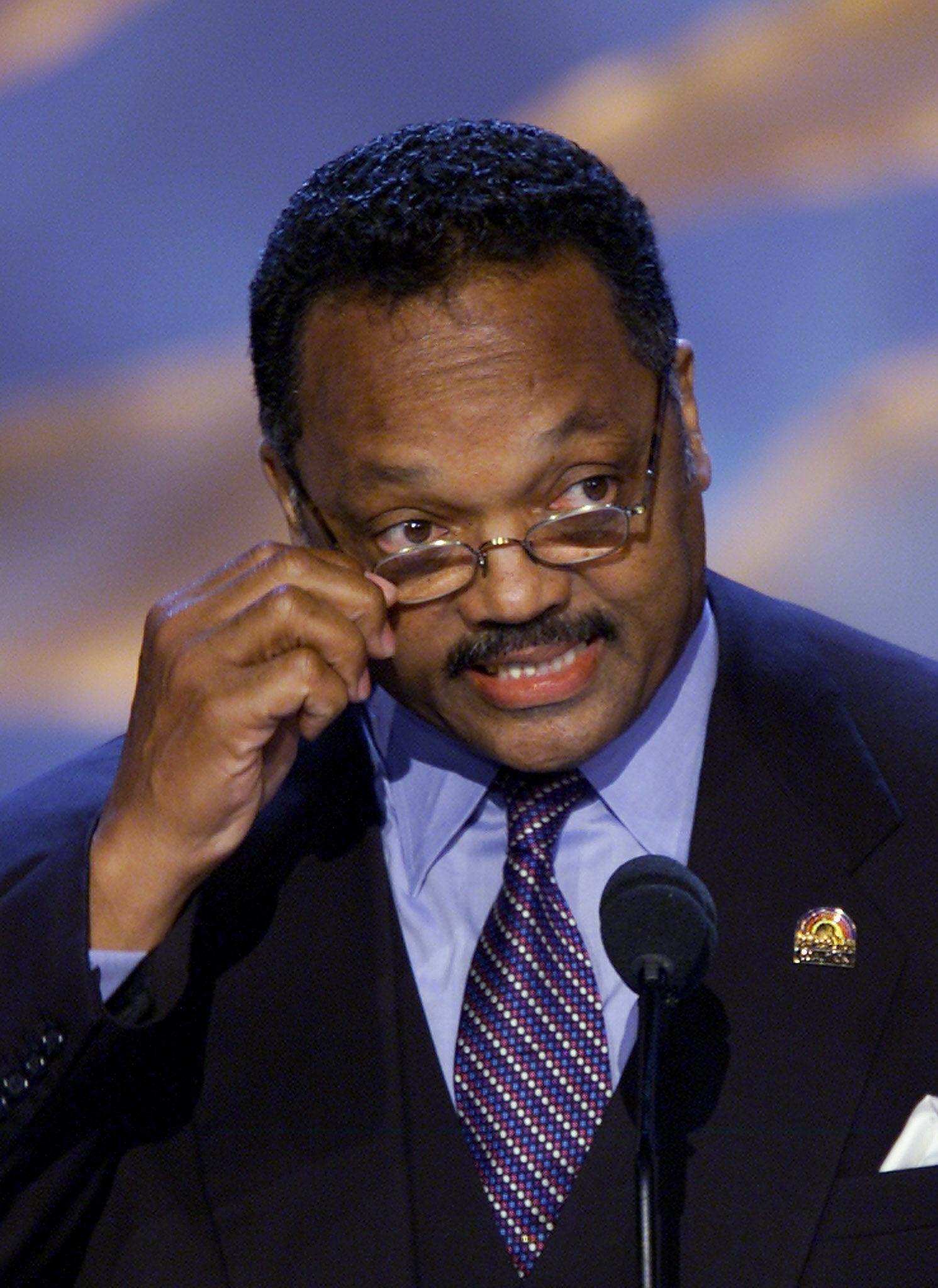
On April fourth, nineteen sixty-eight, the balcony of the Lorraine Motel in Memphis became an altar of American fracture. Martin Luther King Jr. lay dying, and with him fell the clearest moral voice of the Civil Rights era.
But movements do not end with gunshots.
They splinter.
They harden.
They reorganize.
Among those thrust forward into the vacuum was a young organizer from Greenville, South Carolina — Jesse Jackson.
King had been the conscience.
Jackson would become something different: strategist, negotiator, national political force.
The question after Memphis was not whether racism would persist. It did.
The question was how Black leadership would adapt.
Jackson chose engagement with power.
From Moral Appeal to Economic Leverage
Before Memphis, Jackson had already emerged as a key figure within the Southern Christian Leadership Conference. Through Operation Breadbasket, he targeted corporations that profited from Black consumers while excluding Black workers.
Breadbasket was not symbolic protest. It was organized economic pressure. Contracts were negotiated. Jobs were demanded. Investment was quantified.
Jackson absorbed a lesson that would define his career:
Desegregation without economic inclusion is incomplete.
When King was assassinated, Jackson did not retreat into mourning alone. He moved toward institution-building.
Operation PUSH and the Architecture of Influence
In nineteen seventy-one, Jackson founded Operation PUSH (People United to Save Humanity).
PUSH broadened the fight:
- Corporate accountability
- Educational access
- Voter mobilization
- Financial literacy and empowerment
This was a strategic evolution. The movement shifted from street confrontation toward structural participation.
Jackson believed that moral outrage had to translate into measurable outcomes — contracts signed, ballots cast, boardrooms opened.
The Rainbow Coalition: Expanding the Frame
Jackson’s presidential campaigns in nineteen eighty-four and nineteen eighty-eight were not symbolic gestures.
They were infrastructure tests.
Under the banner of the Rainbow Coalition, he attempted to unite:
- Black Americans
- Latino communities
- Labor movements
- Rural farmers
- Poor and working-class whites
- Progressive faith groups
The coalition was not accidental. It was mathematical.
Jackson recognized that demographic isolation limited political leverage. Coalition expanded it.
Though he did not secure the Democratic nomination, he won primaries, secured delegates, and reshaped the party platform. Issues like anti-apartheid sanctions and expanded voting rights gained traction partly because of his campaigns.
His runs demonstrated viability. The presidency was no longer theoretical terrain.
Strategy vs Militancy
Jackson’s institutional approach did not exist without tension.
Organizations such as ours, the Black Panther Party advanced community control, self-defense, and structural confrontation outside electoral frameworks.
The divide was philosophical:
Reform institutions from within?
Or build alternatives outside them?
Jackson leaned toward engagement. Yet he retained movement language and grassroots credibility. He stood between eras — not fully militant, not fully establishment.
That positioning defined him.
Global Stage, Domestic Consequence
Jackson’s activism crossed borders.
He advocated sanctions against apartheid South Africa and aligned publicly with leaders like Nelson Mandela. He engaged in unofficial diplomacy during hostage crises abroad.
Supporters saw courage.
Critics saw ambition.
Either way, he refused to limit Black leadership to domestic confines.
Complexity and Criticism
Jackson’s career was not untouched by controversy. Internal disputes, political rivalries, and public missteps marked different chapters of his life.
But complexity is not contradiction. It is scale.
Leaders who operate for decades accumulate friction.
Legacy is not purity. It is influence.
What His Death Means
With Jackson’s passing, another bridge generation recedes.
He was not King. He did not claim to be.
He was not Panther. He did not attempt to be.
He was something transitional — a figure who carried the moral urgency of the nineteen sixties into the electoral machinery of late twentieth-century America.
He normalized the idea that Black political ambition at the highest level was not audacious — it was necessary.
In an era where coalition politics feels fragile and polarization dominates, Jackson’s model raises a difficult question:
Was coalition naïve?
Or was it unfinished?
His life leaves that debate open.
But it closes nothing.
Movements adapt.
Power recalculates.
History does not pause.
And the vacuum left in Memphis in nineteen sixty-eight did not swallow him.
It propelled him.